ADA Compliance Across Generations
In 1991, my mother returned from a medical leave of absence to her labor-intensive job before her doctor cleared her — because she was terrified someone else would take it if her boss thought she couldn't work.
That instinct — stay quiet, don't ask, don't risk it — is Baby Boomer loyalty in action. Now multiply it across a workforce with four generations who each define "disability" differently, and you start to see why ADA compliance still trips up good employers.
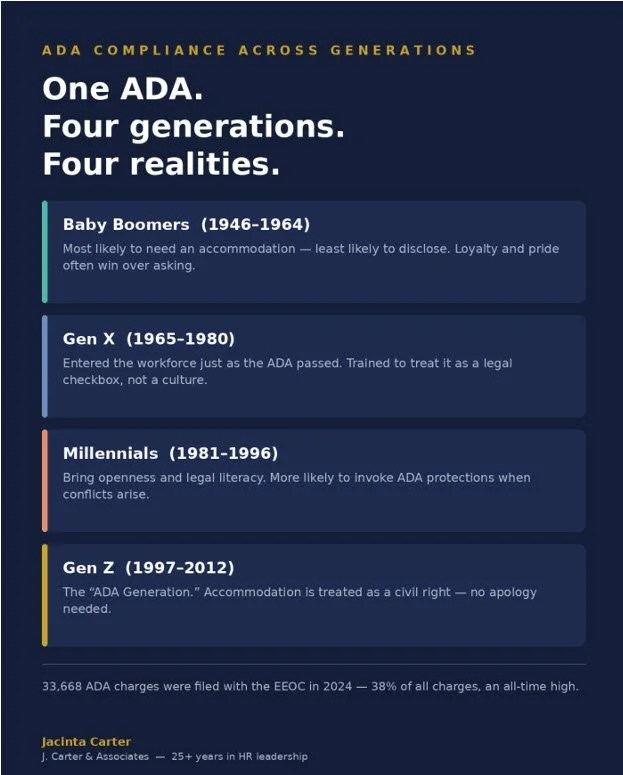
The numbers back it up. In FY2024, the EEOC received 33,668 disability charges — 38% of all charges filed, an all-time high.
Here's what's driving it:
→ Baby Boomers often hide disabilities out of fear and pride.
→ Gen X was trained to treat ADA as a legal checkbox, not a culture.
→ Millennials brought openness and legal literacy — and expect flexibility.
→ Gen Z, the "ADA Generation," treats accommodation as a civil right, full stop (42% have asked for one, vs. just 13% of Boomers).
Why does this matter for HR?
Four generations. Four unwritten rulebooks. When leaders don't understand that, requests get mishandled — not out of malice, but outdated assumptions. That's usually the moment an accommodation conversation turns into a dispute.